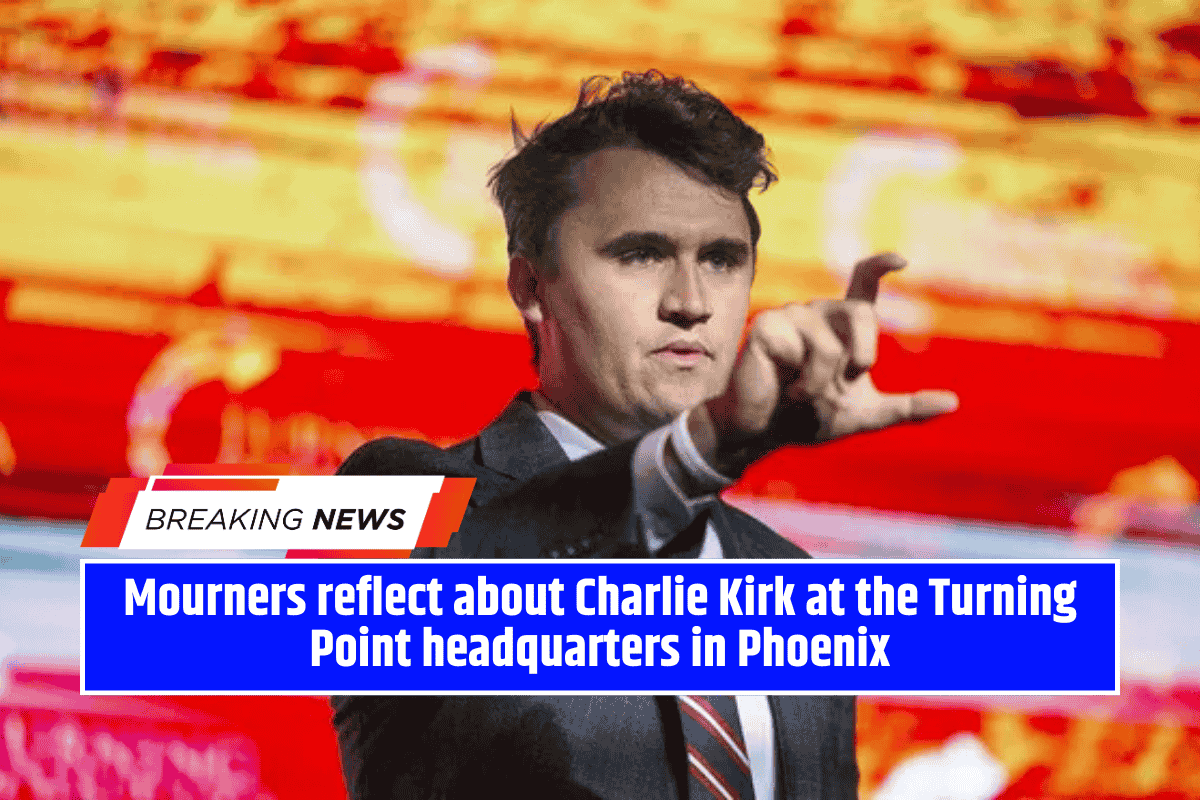
The assassination of Charlie Kirk brought hundreds of grieving supporters to the Phoenix headquarters of Turning Point USA, the organization he founded. Families, students, and longtime allies gathered in silence, leaving flowers and prayers.
The atmosphere was heavy with sorrow, but also with determination to continue the work Kirk had championed.
Grief and Solidarity
Attendees embraced one another, strangers calling each other “brother” and “sister” as they prayed for Kirk’s wife and children. Many said Kirk’s boldness in speaking his mind had given them courage to stand firm in their faith and beliefs. For them, his death represented both a personal and cultural turning point.
A Voice for Free Expression
To mourners like 64-year-old Pawnee Carter, Kirk’s death symbolized more than personal loss; it embodied the dangers faced by conservatives in public life.
She said Kirk died exercising his First Amendment rights, and she credited him with teaching others to defend free speech proudly, even when facing strong political opposition.
A Watershed Moment for Conservatives
Many at the vigil described the tragedy as a watershed moment for the conservative movement. Some suggested that refusing to conform to liberal ideology now carries lethal risk.
This perception, they said, deepened their resolve to honor Kirk’s memory by speaking openly, even if it meant facing criticism or threats.
Political Violence in America
Kirk’s murder comes against a backdrop of rising political violence in the United States. Just this year, two Democratic Minnesota state lawmakers were shot and killed, and an assassination attempt was made against former President Donald Trump on the campaign trail in July. For mourners, the incidents underscore a troubling national trend.
Blame and Anger
At Turning Point’s headquarters, emotions ran high. Some mourners openly blamed Democrats and the media, accusing them of fueling division.
One woman yelled at reporters, “Your fault, you spread the hate!” Others pointed to harsh rhetoric that normalizes calling opponents “Nazis” and vilifying entire groups, warning that such anger is reaching a breaking point.
Calls for Unity and Peace
Not all who gathered pointed fingers. Jacob Kaufman, 24, brought flowers after work, saying there should be no place for political violence regardless of ideology.
Mike Hood, who laid white roses at the site, agreed that incendiary rhetoric on all sides has poisoned the national conversation and intensified dangerous polarization.
Fear and Defiance
For others, fear mingled with defiance. Damon Zomer admitted his wife worried about him attending the memorial, fearing the site could become another target.
Yet he prayed at the headquarters, insisting Kirk’s death would not silence conservatives. Instead, he believed it would strengthen their commitment and pass the “baton” to a new generation.
A Call to Arms
Some mourners spoke of tangible steps in response. Pawnee Carter said she planned to purchase another firearm and believed other conservatives would do the same.
She urged people to march proudly with American flags, armed and unashamed, reflecting a growing sentiment that security and activism must now go hand in hand.
Faith and Martyrdom
For Carter, Kirk’s death carried spiritual resonance. She told her daughter that just as Jesus had not intended to become a martyr but was hated for his message, Kirk’s assassination turned him into one.
To her and many others gathered, Kirk’s memory now symbolized faith, resilience, and the fight for American values.