The University of Pennsylvania has reached a new milestone in its commitment to sustainable development with 55 LEED-certified projects.
Its three latest achievements—the Vagelos Laboratory for Energy Science and Technology (VLEST), Amy Gutmann Hall, and the Ott Center for Track and Field—highlight Penn’s leadership in eco-conscious design and construction, aligned with its Climate & Sustainability Action Plan 4.0.
What Is LEED and Why It Matters
LEED, which stands for Leadership in Energy and Environmental Design, is a globally recognized certification system developed by the U.S. Green Building Council.
It serves as the gold standard for designing, constructing, and operating high-performance green buildings.
LEED certifications come in different levels—Platinum, Gold, Silver, and Certified—based on how well a building meets sustainability criteria such as energy use, water efficiency, materials, indoor environmental quality, and innovation.
VLEST: Penn’s Platinum Powerhouse for Energy Research
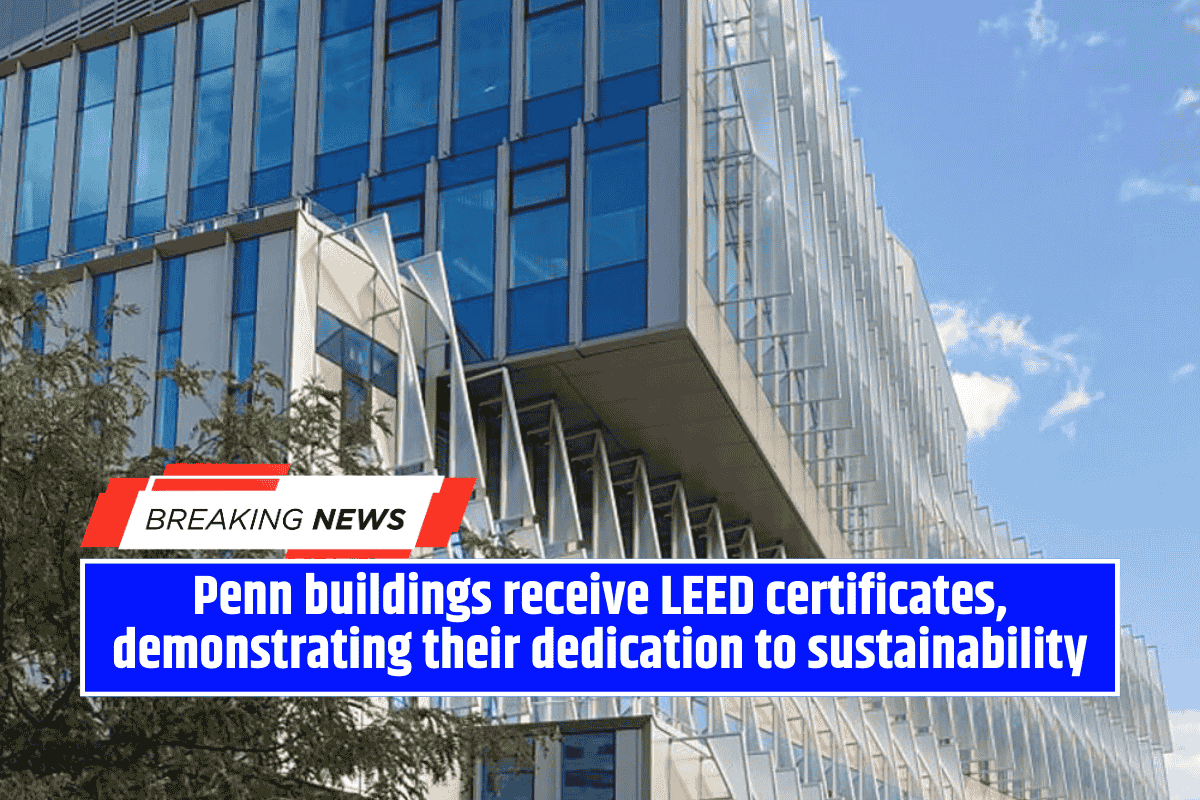
The Vagelos Laboratory for Energy Science and Technology (VLEST), Penn’s newest LEED Platinum-certified building, represents the highest level of sustainable design.
Located at 32nd and Walnut streets, it is a joint venture between the School of Arts & Sciences and the School of Engineering and Applied Science.
Key sustainable features:
- Designed by Behnisch Architekten
- Advanced solar geometric sunshades that reduce energy usage and increase natural light
- Home to the Vagelos Integrated Program in Energy Research (VIPER)
VLEST acts as both a hub for energy innovation and a visual statement of Penn’s environmental leadership.
Amy Gutmann Hall: A Mass Timber Marvel
Amy Gutmann Hall, situated at 34th and Chestnut streets, earned LEED Gold certification. It’s one of the largest mass timber buildings on the East Coast—timber being a far more eco-friendly alternative to steel and concrete.
Designed by:
- Lake|Flato Architects (Executive Architects)
- KSS Architects (Associate Architects)
Green highlights:
- 12,000 sq. ft. green roof
- High-performance envelope with energy-efficient windows and skylights
- Low-flow plumbing fixtures that reduce water use by 33%
- Energy-efficient systems that cut energy use by nearly 20%
This building not only encourages cross-disciplinary collaboration but also demonstrates how architecture can support climate goals.
Ott Center: Sustainable Sports Facility
The Ott Center for Track and Field, completed in 2023, achieved LEED Silver certification and stands as a model for sustainable athletic facilities.
Eco-friendly features include:
- Effective construction waste management
- Heat island and light pollution reduction
- Planting of 64 trees, aligning with Penn’s Ecological Landscape Stewardship Plan and Philadelphia’s tree canopy goals
A Look at Other Recent LEED Projects
Penn’s green building journey isn’t new. In recent years, several major facilities have earned LEED status:
| Project Name | LEED Level | Year Completed |
|---|---|---|
| Penn GSE Expansion and Renovation | Gold | 2023 |
| Penn Medicine Pavilion | Gold | 2021 |
| University Meeting and Guest House | Gold | 2021 |
| Wharton Academic Research Building | Gold | 2020 |
| Gutmann College House | Silver | 2022 |
| Tangen Hall | Silver | 2020 |
Each of these projects reflects Penn’s broader Green Building Initiative, aimed at reducing environmental impact while promoting wellness and innovation.
A University Leading by Example
“These LEED certifications reflect Penn’s commitment to sustainable building design,” said Mark Kocent, University Architect. “We’re building not just for today, but for the future—with energy efficiency, ecology, and wellness at the core of our planning.”
With each project, Penn reinforces its vision of being a national leader in campus sustainability, ensuring its students, faculty, and broader community benefit from eco-conscious, future-ready facilities.