The Trump administration has increasingly focused its efforts on companies that hire undocumented workers, marking a shift from previous administrations that typically prioritized detaining the workers themselves.
This move is part of a broader strategy to address illegal immigration and ensure employers are held accountable for exploiting undocumented labor.
Under federal law, employers are required to verify the eligibility of their workers to work in the United States and face penalties for knowingly violating these laws. However, historically, enforcement has largely targeted workers, leaving employers largely unpunished.
This change in enforcement policy aligns with President Trump’s broader immigration strategy, which includes large-scale deportations, and a stronger stance against companies that hire illegal immigrants.
Officials argue that these employers exploit vulnerable workers, paying them lower wages and subjecting them to unsafe working conditions. Employers, however, often claim they cannot find sufficient American workers for the toughest jobs at the wages they offer.
The Raid on the Georgia Battery Plant
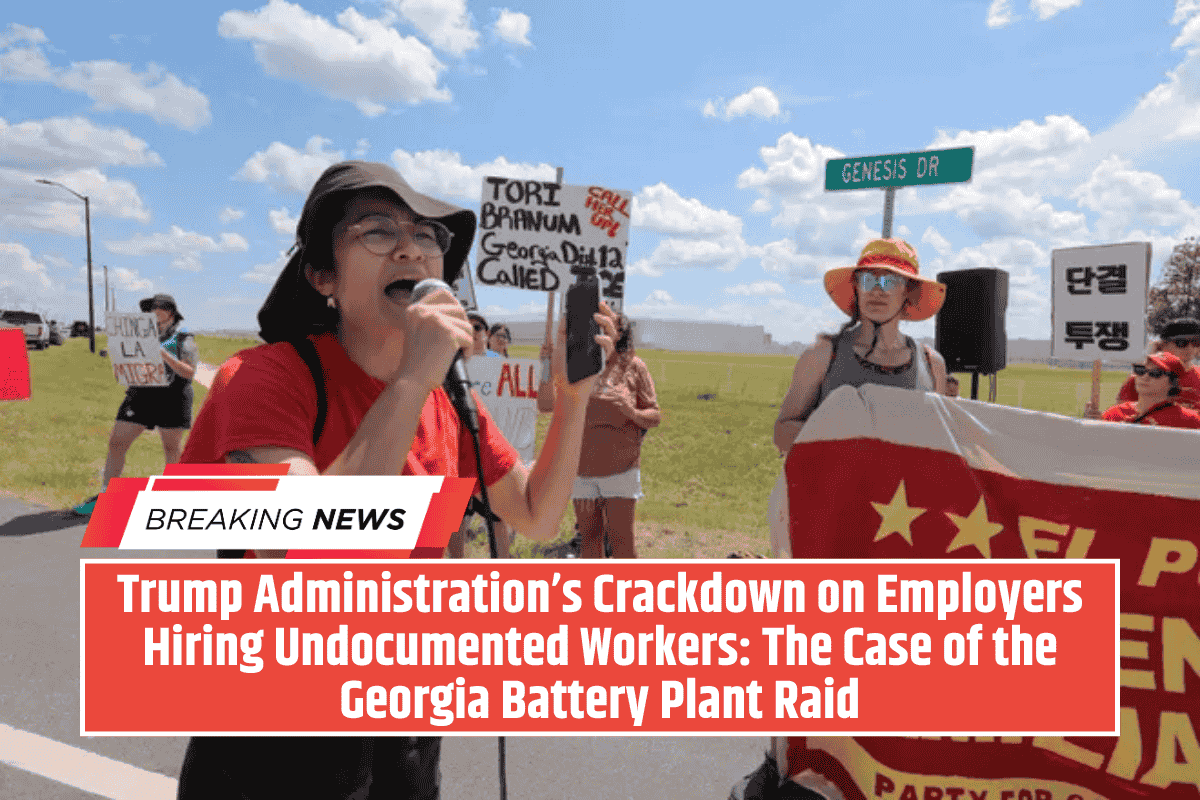
One of the most high-profile examples of the administration’s push to hold employers accountable occurred in September 2025. Federal agents raided the HL-GA Battery Company, a factory located near Savannah, Georgia, which manufactures batteries for Hyundai.
The raid followed a months-long investigation into employment practices at the site. Federal investigators detained nearly 500 workers, the majority of whom were South Korean nationals working without authorization. These workers were swiftly taken into immigration detention for deportation.
The raid drew significant attention for several reasons. Firstly, it involved a foreign-owned company that had invested heavily in U.S. manufacturing. Secondly, the workforce comprised specialized workers from South Korea, whose skills were deemed essential for the plant’s production.
Despite the illegal status of these workers, officials emphasized that foreign companies must abide by U.S. immigration laws while bringing in workers for projects in the country.
Impact on Business Operations and Immigration Policy
While the workers detained during the Georgia plant raid are facing deportation, no major legal actions have yet been taken against the company itself.
The raid highlights the Trump administration’s focus on employers as part of its broader immigration enforcement efforts. Unlike previous administrations, which primarily targeted workers, there has been a notable increase in investigations into companies hiring undocumented workers.
Since the start of 2025, federal authorities have conducted numerous raids targeting illegal labor at various worksites across the country. This includes car washes in California, marijuana farms, a racetrack in Louisiana, and meatpacking plants in Nebraska.
While criminal prosecutions against employers are still rare, the disruption caused by these raids has been significant, affecting business operations and raising concerns about labor shortages in certain sectors.
The Challenges of Prosecuting Employers
Despite the law mandating penalties for employers hiring illegal workers, federal enforcement has historically been lax. Fewer than 200 prosecutions of employers for this offense have occurred over the past decade.
This is partly due to the challenges involved in investigating and prosecuting large companies. Many employers can avoid penalties by claiming ignorance regarding the legal status of their workers. This loophole has allowed companies to exploit undocumented labor without facing serious consequences.
The E-Verify system, a tool intended to help employers confirm the legal status of workers, has also faced criticism. While it can help prevent the hiring of illegal immigrants, it is not foolproof.
High-quality fake documents can be easily produced, making it difficult for employers to verify the authenticity of work permits. Furthermore, the E-Verify system is not mandatory in all states, leaving gaps in enforcement.
The Road Ahead: More Scrutiny and Potential Consequences for Employers
Despite the challenges, the Trump administration’s crackdown on employers hiring undocumented workers has intensified, with more worksite enforcement actions expected.
Federal officials have warned employers that they will be held accountable for hiring illegal workers, and the administration has made it clear that businesses will face serious consequences if they do not comply with immigration laws.
In particular, industries like manufacturing, which often rely on specialized foreign labor, may feel the effects of these stricter policies. The ongoing criminal investigation into the Georgia battery plant underscores the administration’s commitment to holding both workers and employers accountable.
Employers in sectors reliant on undocumented labor may find it increasingly difficult to avoid scrutiny, as federal agencies step up efforts to monitor workplaces and investigate hiring practices.
With more attention on companies exploiting illegal workers, the landscape for U.S. businesses may be changing as stricter immigration enforcement continues to evolve.