Artificial Intelligence (AI) is no longer a distant idea from science fiction—it is a reality shaping nearly every industry. Education is one of the fields where AI is making a strong impact. From personalized learning to automated grading, AI is transforming how teachers teach and how students learn.
In today’s classrooms, AI is being used not only to make lessons more interactive but also to create tailored learning experiences for students of different abilities. With the rise of online learning and digital tools, AI has quickly moved from being an optional tool to becoming a core part of modern education.
This article explores how AI is changing classrooms, the benefits it brings, the challenges it creates, and the possibilities it opens for the future of education.
The Growing Role of AI in Education
AI is entering schools and universities at a rapid pace. According to recent data, the global AI in education market is expected to reach $30 billion by 2032, driven by digital learning platforms and intelligent tutoring systems. This growth shows the rising demand for smarter educational tools that save time, improve performance, and make learning more engaging.
Teachers are beginning to rely on AI-driven platforms to handle repetitive tasks such as grading, attendance, and student performance tracking. Meanwhile, students benefit from AI-powered apps that provide instant feedback and help with problem-solving.
Personalized Learning Through AI
Traditional classrooms often struggle with a one-size-fits-all approach, where every student learns at the same pace. AI changes this by creating personalized learning paths.
AI systems analyze a student’s strengths, weaknesses, and progress to adjust lesson plans accordingly. For example, if a student finds math problems difficult, an AI tool can provide additional exercises and step-by-step explanations. On the other hand, if a student excels in science, AI can introduce advanced materials to keep them challenged.
This personalized model increases student engagement and helps reduce frustration, making learning more enjoyable and effective.
AI-Powered Tutoring Systems
AI tutors are becoming an important extension of traditional teaching. These systems are available around the clock, offering support outside school hours. They can explain complex concepts, provide quizzes, and guide students through difficult topics.
Unlike human tutors, AI tutors do not tire or require scheduling. This makes learning flexible and accessible, especially for students in remote areas where qualified teachers are scarce.
Automated Grading and Assessment
One of the biggest advantages of AI in education is automated grading. Teachers spend hours marking assignments and exams, leaving them with less time to engage with students. AI can handle grading for multiple-choice, short-answer, and even essay-type questions with growing accuracy.
By automating grading, AI reduces teacher workload and ensures faster feedback for students. This not only improves efficiency but also allows teachers to focus more on creativity, mentoring, and critical thinking exercises.
Virtual Classrooms and AI Chatbots
With the growth of online learning, virtual classrooms powered by AI are becoming the new normal. AI tools create interactive learning environments where students can collaborate with peers, attend live sessions, and access recorded lessons.
Chatbots are another growing trend in education. They answer student questions instantly, guide them through assignments, and even provide reminders about deadlines. This kind of support reduces the dependency on teachers for routine questions and helps students become more independent learners.
AI and Predictive Analytics in Education
AI is not only useful for real-time learning but also for predicting student performance. Predictive analytics powered by AI can track attendance, participation, test results, and assignment submissions to forecast a student’s success.
This allows teachers to identify at-risk students early and provide extra support before problems grow. Schools and universities can also use predictive analytics to design better curriculums, allocate resources effectively, and improve overall performance.
Benefits of AI in Education
The adoption of AI in classrooms brings several clear advantages:
- Better student engagement with interactive, gamified lessons.
- Personalized learning tailored to each student’s pace and abilities.
- Time-saving tools that reduce teacher workload.
- Faster grading and feedback to help students improve quickly.
- Access to global learning resources for students everywhere.
Challenges of Implementing AI in Education
Despite its advantages, AI in education also faces significant challenges.
- High costs of implementation make it difficult for underfunded schools to adopt AI systems.
- Data privacy concerns arise when sensitive student information is stored and analyzed.
- Over-reliance on technology may reduce the development of critical thinking and problem-solving skills.
- Teacher resistance can occur due to a lack of training or fear of being replaced by machines.
Addressing these challenges is essential to ensure AI benefits both students and educators without creating inequality.
Comparing Traditional Classrooms and AI-Enhanced Classrooms
| Feature | Traditional Classrooms | AI-Enhanced Classrooms |
|---|---|---|
| Learning Style | One-size-fits-all | Personalized and adaptive |
| Teacher Workload | High, with grading and admin tasks | Reduced, thanks to automation |
| Student Support | Limited to class hours | 24/7 support with AI tutors and chatbots |
| Feedback Speed | Delayed | Instant |
| Resource Availability | Textbooks and limited materials | Global digital libraries and AI-driven tools |
The Future of AI in Education
The future of AI in education is filled with possibilities. As technology advances, AI will not only support teachers but also create entirely new methods of learning.
In the coming years, we can expect:
- More immersive experiences using Virtual Reality (VR) and Augmented Reality (AR).
- Smarter assessment tools that evaluate creativity, collaboration, and critical thinking.
- Wider access to education for students in remote or underserved regions.
- AI mentors that guide students in choosing careers based on their skills and interests.
If implemented wisely, AI can bridge the gap between traditional education and the demands of the digital age.
Interesting Facts About AI in Education
- The AI education market is growing at an annual rate of over 30%.
- Over 60% of students say AI tools make learning more engaging.
- AI can reduce teacher grading time by up to 50%.
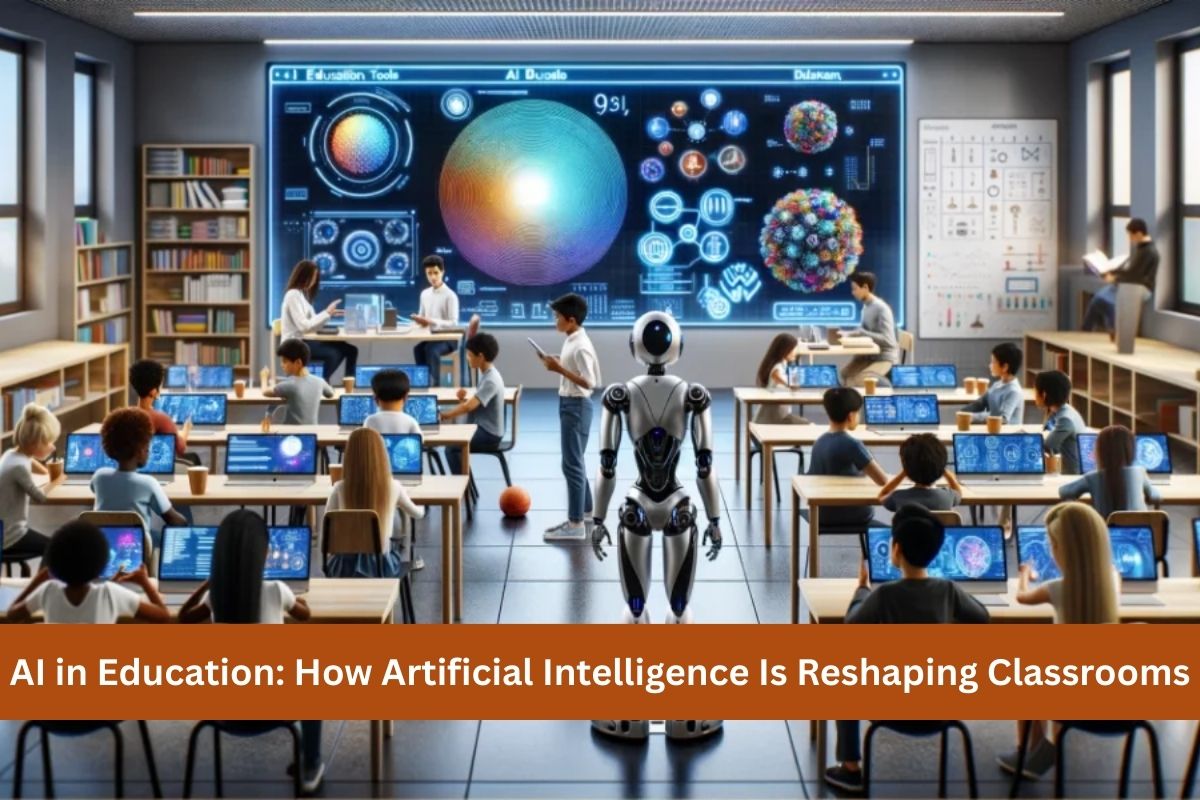
- Some schools already use AI robots as teaching assistants in classrooms.
Conclusion
AI in education is no longer an experiment—it is a reality reshaping classrooms across the world. By offering personalized learning, automated grading, and predictive insights, AI is helping students learn more effectively and giving teachers the tools they need to focus on what matters most: inspiring young minds.
While challenges such as cost, privacy, and over-reliance must be addressed, the potential of AI in education is enormous. As technology continues to grow, AI will play a central role in shaping the classrooms of tomorrow.
The key lies in using AI as a partner, not a replacement, ensuring that the human touch in education remains as strong as ever.