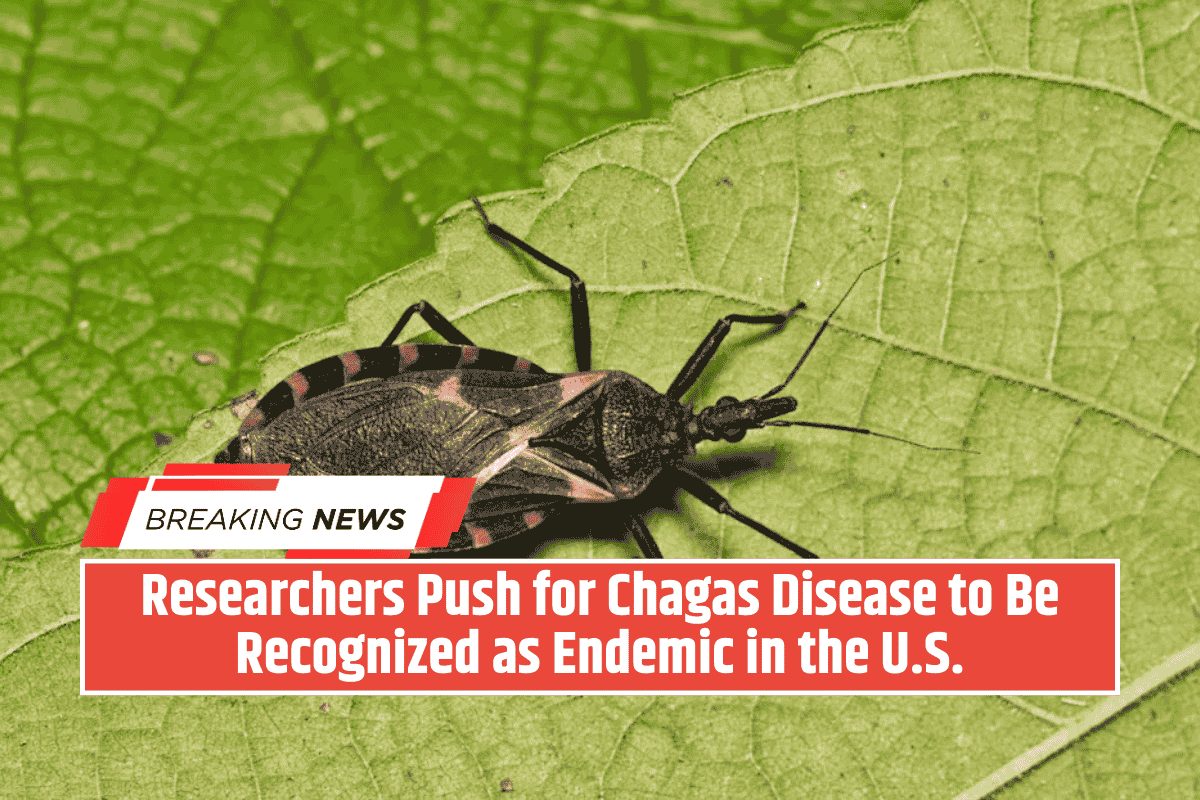
A coalition of researchers from leading universities and health agencies is urging that Chagas disease, commonly called “kissing bug disease,” be classified as endemic in the United States.
They argue that its presence is now significant enough to be considered a regularly occurring condition rather than a rare or imported illness.
Evidence From Nationwide Studies
Since 2013, Texas A&M University’s Kissing Bug Community Science program has received nearly 10,000 reports of kissing bugs across 31 states. In a tested subset, about half of the insects carried the parasite Trypanosoma cruzi, which causes Chagas disease.
These findings underscore the increasing risks of local transmission within U.S. communities.
Locally Contracted Cases Emerging
Researchers have documented locally acquired human infections in eight states. This means patients contracted the disease domestically, not through international travel.
Such evidence marks a turning point in understanding Chagas as more than a foreign threat. It suggests the parasite is firmly established in parts of the country where kissing bugs thrive.
Lack of National Tracking
Despite these findings, there is no federal system for monitoring Chagas disease because it is not a nationally notifiable condition. Without mandatory reporting, the true number of U.S. cases remains uncertain.
Health experts caution that this gap in data hampers awareness, timely diagnosis, and coordinated responses to potential outbreaks nationwide.
Understanding Chagas Disease
Chagas disease is caused by the parasite Trypanosoma cruzi, which is transmitted through triatomine insects, commonly called kissing bugs. The bugs become carriers after feeding on infected hosts.
Transmission occurs when parasite-laden droppings enter the body through cuts, eyes, or mouth. Without early detection, the infection can progress silently for years.
Acute Phase Symptoms
The acute phase of Chagas occurs within weeks or months of infection. Symptoms can be mistaken for other illnesses and include fever, fatigue, body aches, headache, rash, diarrhea, vomiting, and loss of appetite.
A distinctive symptom, known as Romaña’s sign, is eyelid swelling caused by accidental contact with contaminated bug droppings.
Chronic Phase and Serious Complications
The chronic phase can last years or even decades, often without noticeable signs until complications arise. Serious health risks include an enlarged heart, heart failure, irregular heart rhythms, or sudden cardiac death.
Digestive issues, such as an enlarged esophagus or colon, can cause long-term eating or bowel difficulties, severely impacting quality of life.
Who Is at Risk?
While Chagas is historically associated with rural Latin America, growing evidence shows risk within the United States, particularly in southern states. People living near habitats where kissing bugs thrive face higher exposure.
Because many carriers remain asymptomatic for years, individuals with unexplained heart or digestive problems are often urged to get tested.
Importance of Testing and Awareness
The Centers for Disease Control and Prevention estimate that 20% to 30% of infected individuals eventually develop serious symptoms. With no federal reporting system in place, researchers stress the need for greater awareness among doctors and patients.
Early testing and treatment can prevent long-term complications, making education a vital part of prevention.
A Call for Recognition
By seeking to classify Chagas as endemic, researchers hope to raise urgency for surveillance, funding, and preventive strategies in the United States.
With kissing bugs documented in more than half the country, experts argue that ignoring the disease risks overlooking a growing public health concern that demands nationwide attention.